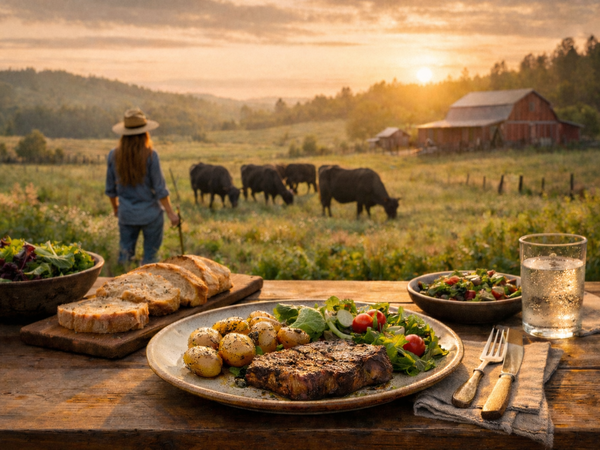


A Climate Solution That Looks Like a Meal
Author: Farmer Kelley
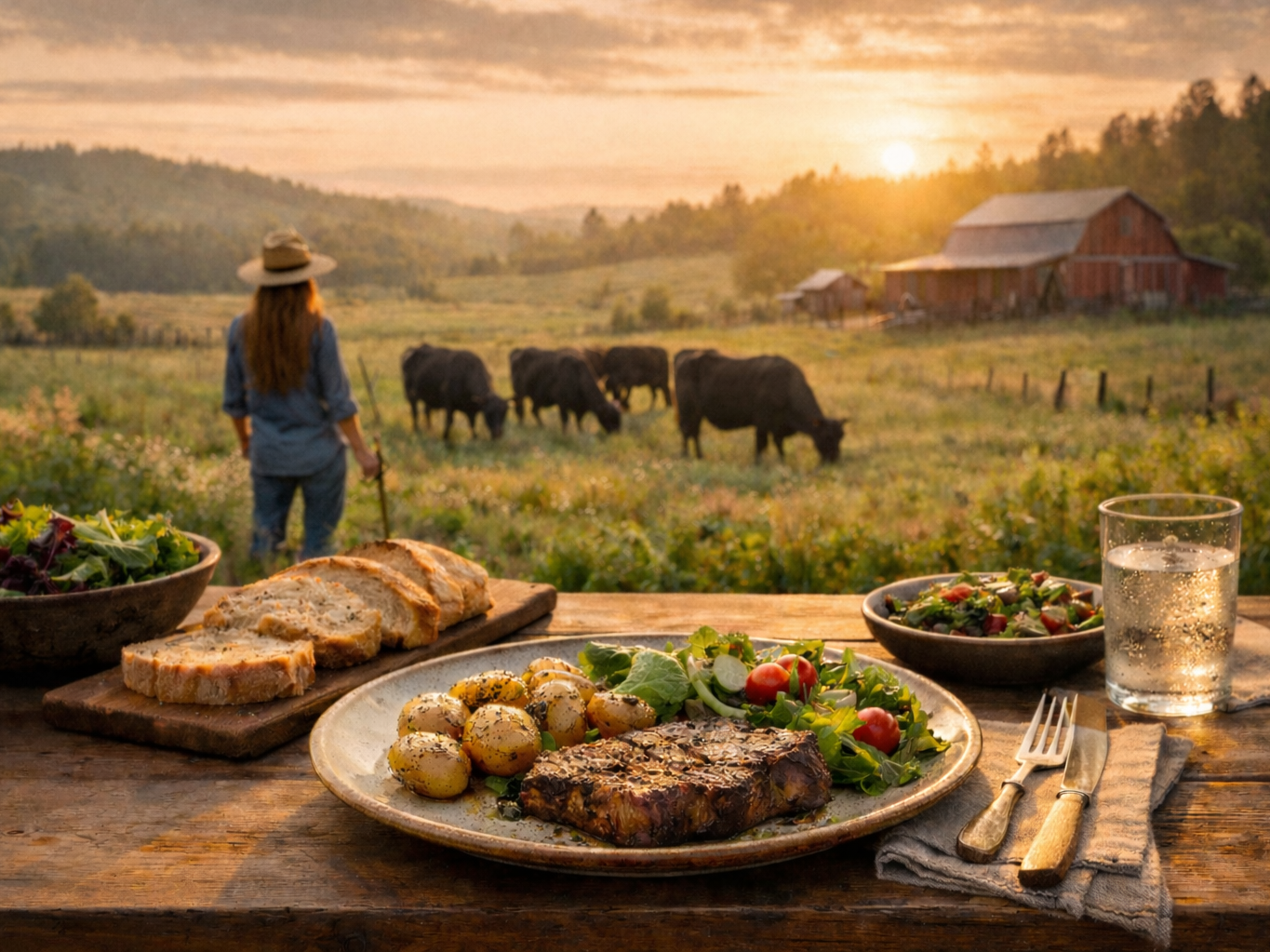
Pasture-raising won’t save the planet by itself.
No honest farmer would claim that it will. There's no single practice, product, or policy that fixes something as layered as climate, land, and food.
But pasture-based farming does something uncommon.
It connects environmental care to everyday nourishment.
Not through offsets or abstractions, but through meals. The kind cooked at home. The kind shared without explanation. The kind that quietly reflects a set of choices made long before the food ever reached the plate.
Where Care Becomes Personal
Most climate conversations live far away from daily life. They exist in reports, targets, and timelines that feel detached from how people actually eat and live.
Pasture-based systems pull that distance closer.
They ask different questions at the dinner table.
Who raised this animal?
What did it eat?
What did this land look like before, and what will it look like after?
When food comes from land that must recoverin order to continue producing, stewardship stops being theoretical. Farmers are paid not just for volume, but for patience. For restraint. For doing less at the right time.
That kind of care doesn’t scale easily. But it does endure.
Nourishment as a System
A meal from a pasture-based farm carries more than calories.
It carries decisions about soil health.
About water retention.
About whether grass was allowed to rest.
About whether animals lived within a rhythm instead of a schedule.
This is not about perfection. Pasture-raising still uses resources. It still has a footprint. But it trades extraction for participation.
The land improves because someone chose to manage it carefully.
The farmer stays because that care is economically viable.
The eater becomes part of the cycle without having to opt into a movement.
They just eat.
The Quiet Power of Choice
There’s nothing dramatic about cooking a meal at home.
No declarations. No virtue signaling. Just food prepared for people you care about.
But over time, those choices matter.
When enough meals come from farms that prioritize living soil and functional ecosystems, the incentive shifts. Stewardship becomes the product. Improvement becomes the goal.
Not because it sounds good, but because it works.
Not a Grand Promise
Pasture-raising isn’t a silver bullet.
It’s slower than industrial systems. More demanding. Less predictable.
But it’s also grounded in reality.
It accepts complexity instead of erasing it.
It respects limits instead of overriding them.
It lets nourishment and responsibility exist in the same place.
A climate solution that looks like a meal doesn't ask people to save the world.
It asks them to participate in it.
One plate at a time.

Recipes you want to make with meats
that nourish your health.
Call Us : 860-379-8961