

Sustainable Farming: How Pasture-Raising Helps the Planet
Author: Farmer Kelley
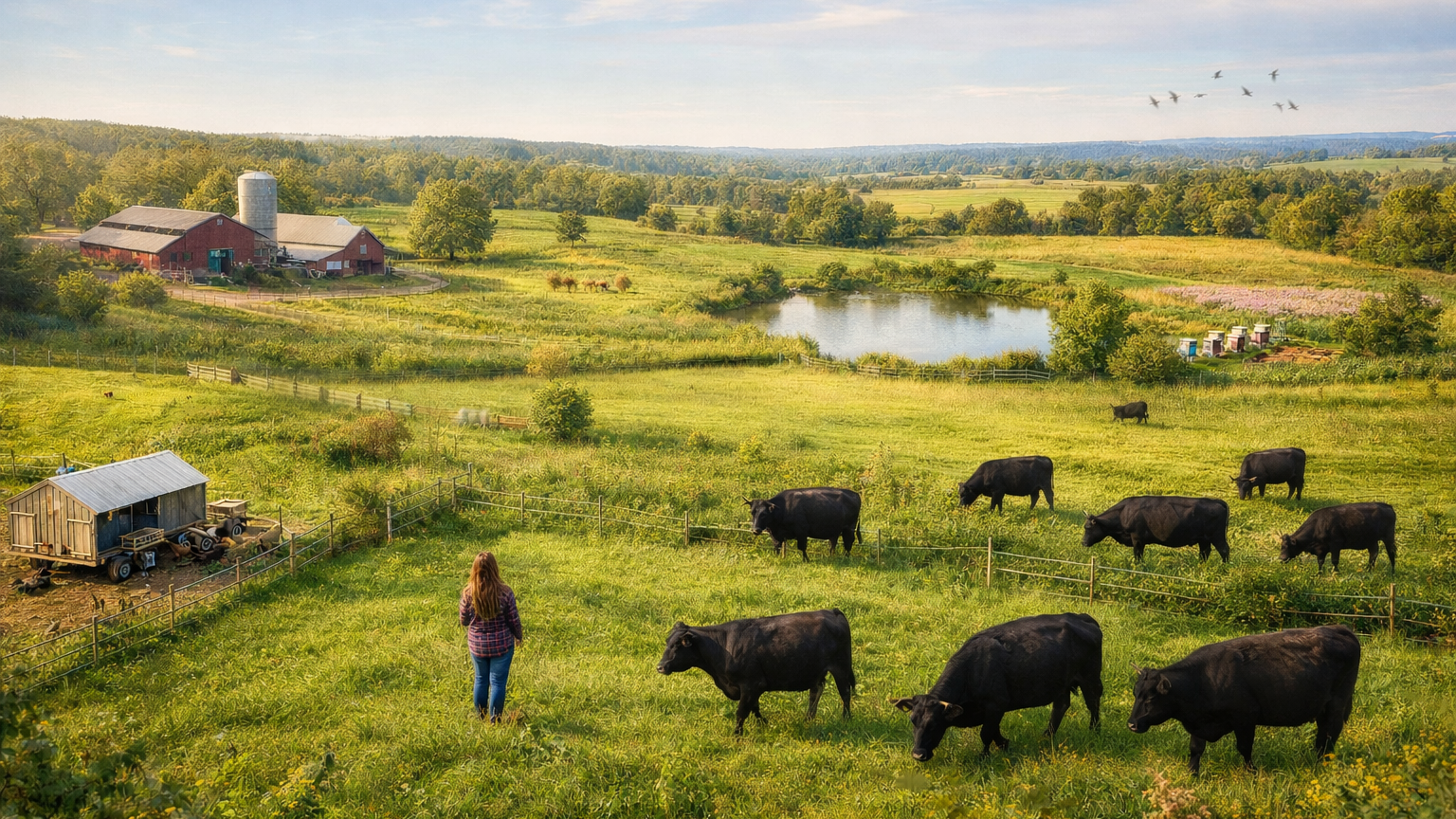
In recent years, more people have begun to look beyond what is on their plate and ask a deeper question: How was this food produced, and what impact did it have on the earth? Sustainable farming, particularly pasture-raising, offers one of the most meaningful answers.
Pasture-raising is not a new idea. For generations, animals were raised outdoors, grazing on natural grasses and moving across the land in harmony with the seasons. Today, this traditional approach is being rediscovered—not out of nostalgia, but because it provides real environmental benefits.
Healthier Soil, Naturally
One of the greatest advantages of pasture-raising is its effect on soil health. When animals graze in managed rotations, they help fertilize the land naturally. Their manure returns nutrients to the soil, reducing the need for synthetic fertilizers. At the same time, grazing stimulates grass growth, encouraging deeper root systems that improve soil structure and water retention.
Healthy soil is more than just fertile ground—it acts as a carbon sink, capturing carbon from the atmosphere and storing it in organic matter. This process plays a quiet but important role in mitigating climate change.
Supporting Biodiversity
Pasture-based systems often create a more diverse landscape than confined or monoculture farming. Fields with mixed grasses, herbs, and native plants provide habitat for insects, birds, and small wildlife. Pollinators, in particular, benefit from these environments, and their presence supports the broader ecosystem, including nearby crops.
By working with nature rather than against it, farmers can help maintain balance in the local environment.
Cleaner Water, Less Pollution
Industrial farming systems can concentrate waste in ways that risk contaminating water sources. In contrast, well-managed pasture systems distribute nutrients gradually across the land. Grasslands also act as natural filters, reducing runoff and helping keep streams and groundwater cleaner.
Additionally, because pasture-raised animals rely largely on natural forage, there is often less dependence on heavily processed feeds that require intensive crop production and chemical inputs.
Efficient Use of Land
Not all land is suitable for growing crops, but much of it can support grazing animals. Pasture-raising makes use of hills, marginal soils, and grasslands that might otherwise remain unproductive. In this way, farmers can produce nourishing food without competing directly with crops grown for human consumption.
This approach respects the natural character of the land, allowing each landscape to be used in a way that suits it best.
Animal Welfare and Environmental Balance
Sustainability is not only about the environment; it also includes the well-being of animals. Animals raised on pasture have space to move, fresh air, and the ability to express natural behaviors. These conditions often result in healthier animals, which in turn reduces the need for interventions such as routine antibiotics.
Healthy animals, healthy soil, and healthy ecosystems are closely connected. When one is cared for, the others benefit.
A Thoughtful Choice for the Future
Sustainable pasture-raising is not a quick fix, nor is it the only solution to environmental challenges. But it is a practical and proven approach that respects natural systems while producing high-quality food.
For farmers, it requires patience, stewardship, and a long-term view of the land. For consumers, it offers an opportunity to support a method of farming that nourishes both people and the planet.
Choosing pasture-raised products is, in many ways, a quiet vote for healthier soils, cleaner water, greater biodiversity, and a more balanced relationship between agriculture and nature.

Recipes you want to make with meats
that nourish your health.
Call Us : 860-379-8961