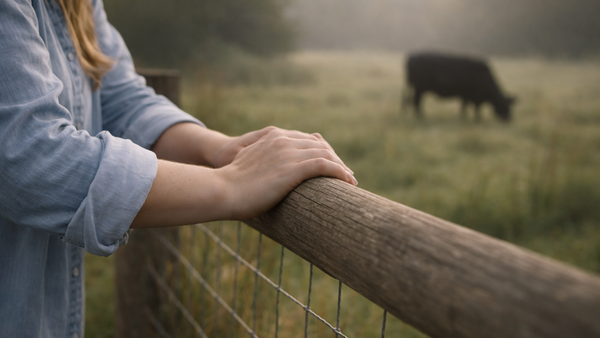


The Kind of Love That Lasts: What Farming Teaches Us
Author: Farmer Kelley
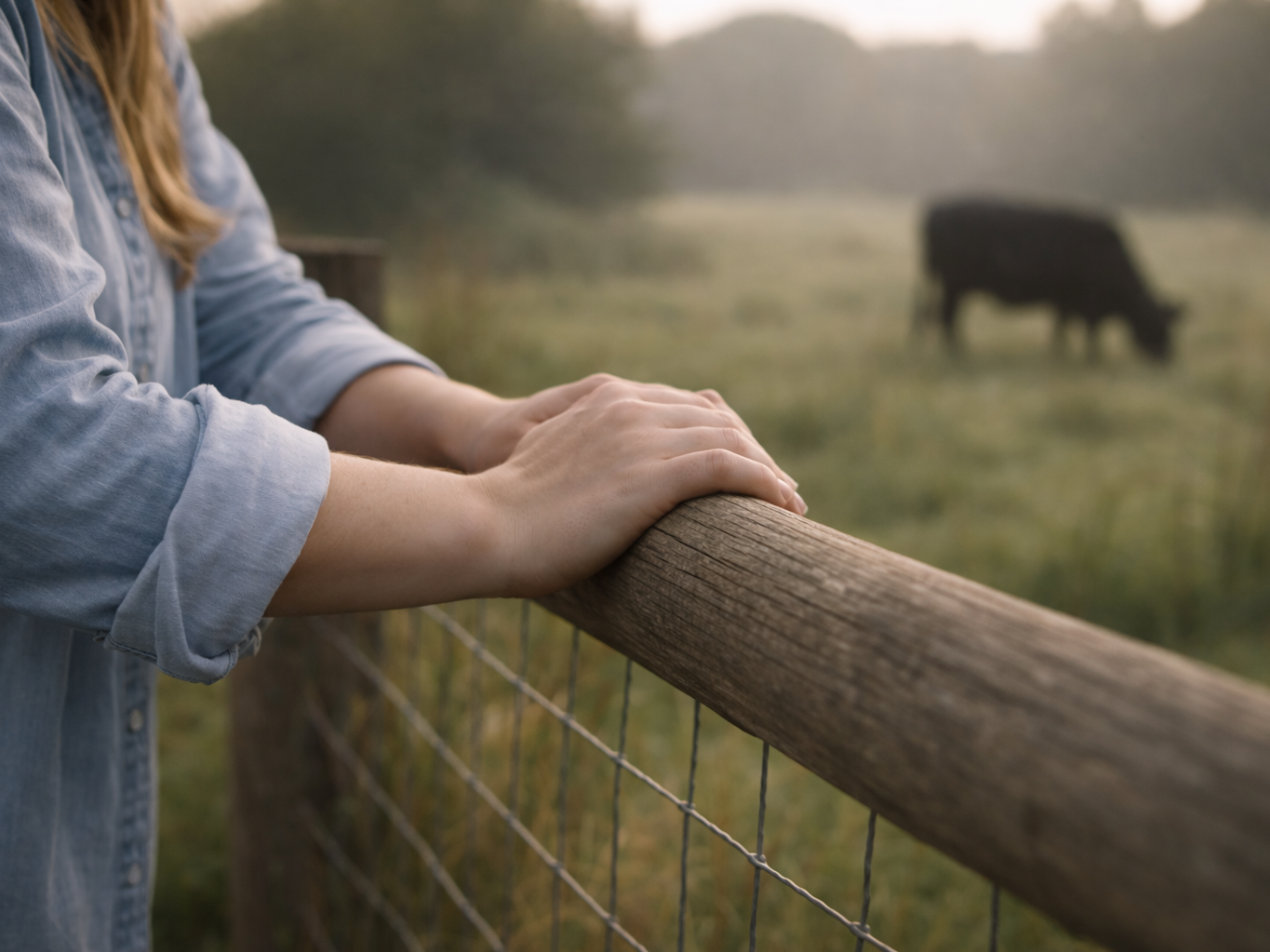
There is a kind of love that isn’t loud or showy.
It doesn’t arrive with grand gestures or quick results.
It moves slowly, patiently, often unnoticed by anyone except those living it day by day.
Farming teaches this kind of love.
And perhaps that’s why, as Valentine’s Day approaches, it feels fitting to reflect on what caring—for land, animals, and people—really means.
Because on a farm, love is rarely spoken.
It is practiced.
Love Looks Like Patience
In farming, very little happens overnight.
Grass takes time to grow.
Soil takes seasons to rebuild.
Animals mature at their own pace, not according to a production schedule.
There is a rhythm to it, and that rhythm cannot be rushed without consequences.
Modern agriculture often prioritizes speed—faster growth, faster turnover, faster results. But nature has never been in a hurry. Healthy systems develop gradually, and the benefits of careful stewardship are often measured in years rather than weeks.
Choosing to work within that rhythm requires patience.
And patience, at its heart, is a form of care.
Love Begins in the Soil
Everything starts beneath our feet.
Healthy soil is not just dirt—it is alive, filled with microorganisms, organic matter, and complex relationships that sustain plant life. When soil is cared for properly, it retains water better, supports diverse grasses, and provides the nutrients animals need to thrive.
This is why responsible farmers think first about the land itself.
Practices like rotational grazing allow pastures to rest and recover. Roots grow deeper, soil structure improves, and the land becomes more resilient over time.
It’s a quiet process.
No one applauds a healthy pasture.
But every good meal begins there.
Love Means Respecting Animals
Animals raised on pasture live differently than those raised in confinement.
They move freely.
They graze naturally.
They experience sunlight, fresh air, and space.
This isn’t just about ethics—though ethics matter deeply. It also affects the quality of the food produced. Animals raised in low-stress environments tend to be healthier, and that health carries through to the meat itself.
Calm animals grow steadily.
They develop naturally.
And they reflect the environment in which they were raised.
Caring for animals properly requires attention, consistency, and responsibility every single day—not just when it is convenient.
That, too, is a form of love.
Love Is Consistency
Perhaps the most important lesson farming teaches is that love is not an occasional act.
It is repetition.
Checking fences.
Moving animals.
Watching the weather.
Walking the pastures.
Fixing what breaks.
Preparing for seasons long before they arrive.
Most of these tasks are small. None are glamorous. Yet together, they form the foundation of good farming.
The same is true of anything that lasts—relationships, health, community, and trust are all built the same way: slowly, through steady care.
Love Shows Up at the Table
When food is raised thoughtfully, it carries a story with it.
A story of soil tended carefully.
Of animals raised with respect.
Of farmers who chose patience over shortcuts.
We may not always see those steps, but they are there in the flavor, in the nourishment, and in the quiet confidence of knowing where our food comes from.
Choosing food raised this way is, in its own small way, an act of care—for ourselves, for our families, and for the land that feeds us.
A Different Kind of Valentine
Valentine’s Day often celebrates love in its most visible forms—flowers, chocolates, grand gestures.
But there is another kind of love worth recognizing.
The kind that wakes early in the cold.
The kind that repairs fences in the rain.
The kind that thinks in seasons instead of days.
The kind that lasts.
And perhaps, in the end, that is the kind of love that matters most.

Recipes you want to make with meats
that nourish your health.
Call Us : 860-379-8961